Systems Architecting and Engineering News

Azad M. Madni has been awarded the 2026 John Fritz Medal, widely regarded as engineering’s highest honor and often called the “Nobel Prize of Engineering.”
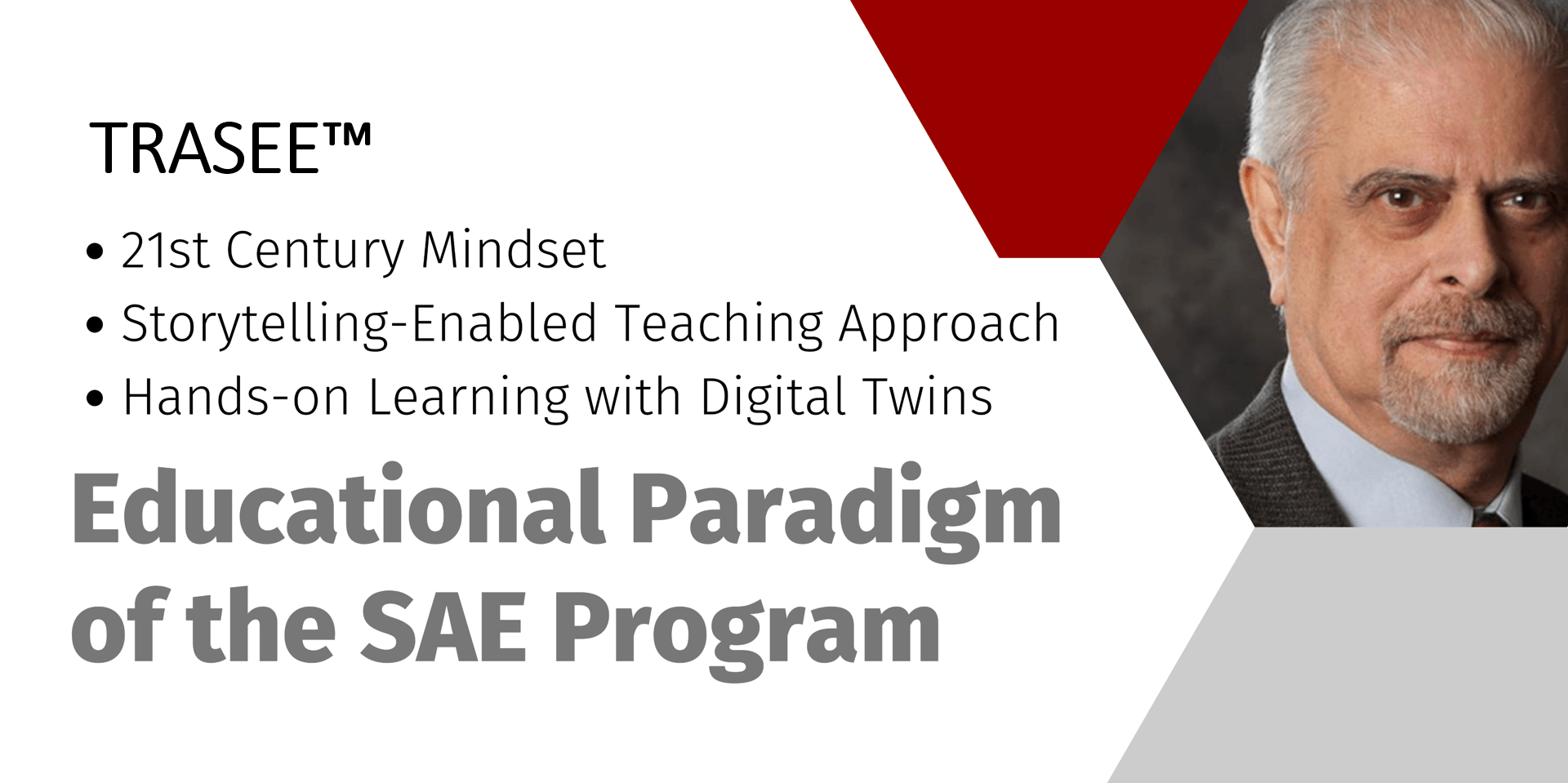
The TRASEE™ (Transdisciplinary Systems Engineering Education) paradigm at USC’s SAE program is an innovative educational approach that develops 21st-century systems engineers by integrating interdisciplinary thinking, storytelling-based learning, hands-on digital twin experiences, and dynamic assessment to prepare students for complex real-world problem solving.
The USC Systems Architecting and Engineering (SAE) program prepares engineers and technical leaders to design, integrate, and manage complex systems across industries through a multidisciplinary, practice-oriented graduate education.Test description


USC’s Systems Architecting and Engineering program is led by distinguished faculty, industry experts, and research professionals whose deep technical expertise and real-world leadership experience drive innovation in complex systems design and provide students with mentorship grounded in practice as well as theory.Test description

For the second consecutive year, a USC Viterbi faculty member received the National Academy of Engineering’s Bernard M. Gordon Prize, with Azad M. Madni—systems engineering pioneer, Northrop Grumman Foundation Fred O’Green Chair in Engineering, and University Professor of Astronautical Engineering—honored for defining transdisciplinary systems engineering and creating TRASEE™, an innovative educational approach that fosters creative, out-of-the-box thinking through storytelling and role-playing.

Jamani King and the Stimulating STEM program which focuses on AI, coding, and robotics were highlighted.
Systems Architecting and Engineering
The USC Viterbi School’s Systems Architecting and Engineering program provides graduate engineers and engineering managers with the advanced knowledge and skills necessary for conceptualizing, designing, implementing, and managing complex systems. The emphasis is both on the processes by which complex systems are conceived, planned, designed, built, tested and certified as well as the system itself. The knowledge and insights gained from the SAE program can be applied to defense, space, aircraft, homeland security, healthcare, and energy grid, transportation and other commercial industries.
Discover Viterbi: Systems Architecting & Engineering